

Under Maine law, needle exchange programs like Needlepoint Sanctuary can give an IV drug user up to 100 free, clean needles in exchange for 1 dirty one. The logic behind this is that a prevalence of clean needles will stop people from using dirty ones, reducing the transmission of diseases.
Unfortunately, despite these efforts, Bangor and Penobscot County are currently experiencing an HIV epidemic. 41 cases, 95% of which are related to drug use, have been reported as of April, 2026.
The City pays about $2 to a few different organizations to pick up discarded needles for public safety. The City also pays for the “free” needles in the first place. I mean, what’s next? Is the city going to pay for the drugs as well?
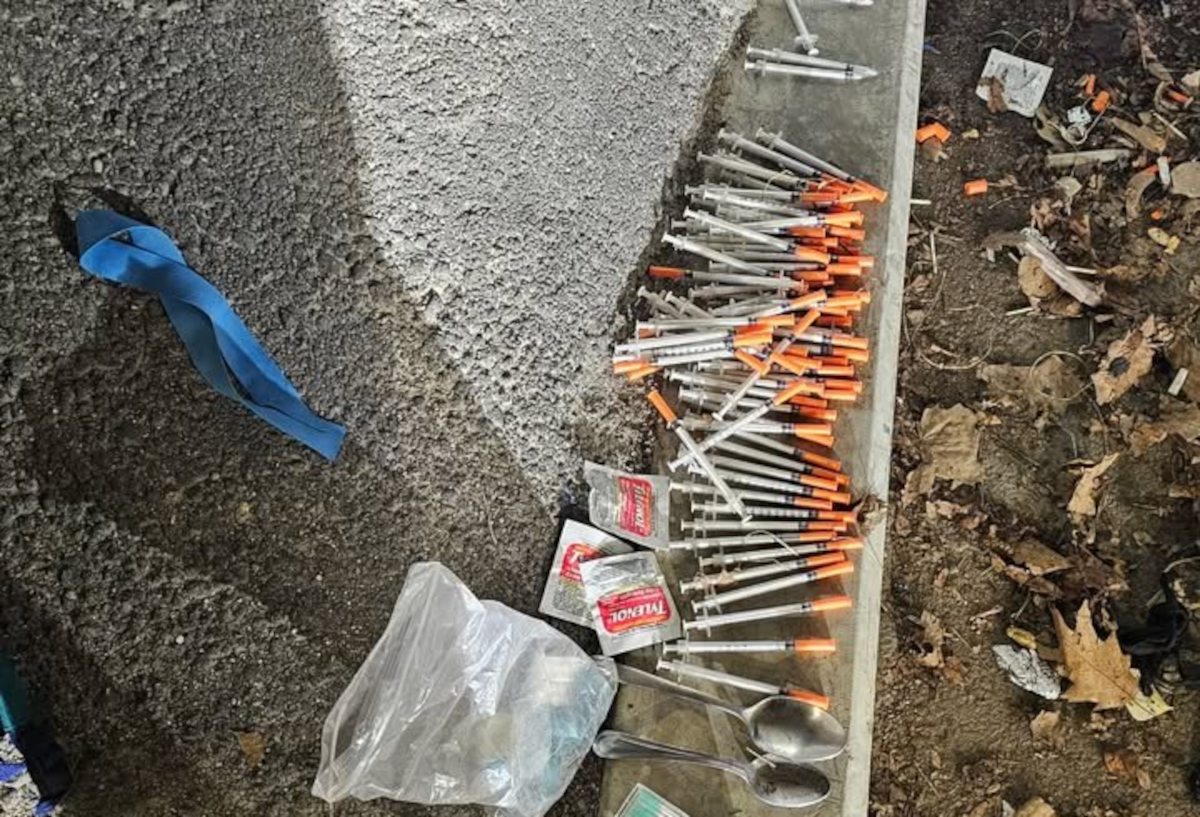
Currently Downtown near the library, it is very easy for someone to find a needle. If we’re being honest, we’ve all seen at least one or two.
Calling for a Lower Ratio
Needle exchange programs first appeared in the United States in 1986 in New Haven, Connecticut. The original programs operated on a strict 1 clean needle for 1 dirty needle basis. The goal was straightforward: reduce the sharing of contaminated syringes to help slow the spread of HIV and other bloodborne diseases — without flooding communities with excess needles.
Today in Maine, programs like Needlepoint Sanctuary operate under a very different model. Under state rules, a person can receive up to 100 clean needles for just 1 dirty one returned. At roughly $0.40 per sterile syringe, one exchange can cost taxpayers up to $40. When you multiply that by the hundreds of thousands of needles distributed in Penobscot County in recent years, the expense adds up quickly — especially when we’re still seeing a growing HIV outbreak in Bangor.
This is not to mention the fact that the taxpayer is also on the hook for up to $200 per exchange in clean-up fees. After decades of forking over cash to non-governmental organizations to solve problems, people are beginning to wake up to the fact that NGOs often worsen the problems they are working on.
In this case, by handing out needles by the dozen, Needlepoint Sanctuary and other agencies are exacerbating the problem of drug use, while at the same time feeding the bottom line of organizations that clean up the needles. In 2025, over $15,000 was spent on cleaning up needles. That’s money that could have gone to any other thing, including lowering the city budget.
The Problem with the Current Approach
The core logic remains the same as in 1986: provide clean needles to prevent disease transmission. But the massive 100:1 ratio has produced unintended consequences:
- Visible needle litter in public spaces
- A serious HIV epidemic in Penobscot County (dozens of cases linked to injection drug use)
- A defeatist attitude that “they’re going to use anyway”
This mindset is dangerous. It shifts focus away from recovery and treatment and toward simply managing addiction. We should never accept that illegal drug use — especially with deadly substances like fentanyl — is inevitable.
Fentanyl is a Schedule W drug under Maine law. Simple possession (especially in larger amounts) is a felony. Lax enforcement and policies that treat drug use as a foregone conclusion only encourage more possession and more harm.
A Better Path Forward
We can protect public health without turning our city into a needle distribution hub. Bangor needs:
- Stricter limits on needle distribution (closer to true 1-for-1)
- Stronger emphasis on drug treatment, recovery services, and personal accountability
- Full support for law enforcement to do their jobs
- Real consequences for illegal drug possession and trafficking — we’re talking decades in prison in the most egregious cases
If we want safer streets for our kids and families, we must reject defeatism. We need common-sense policies that reduce both disease transmission and open drug use — not more of the same failed approach.
Image credit: The Maine Wire on X.